

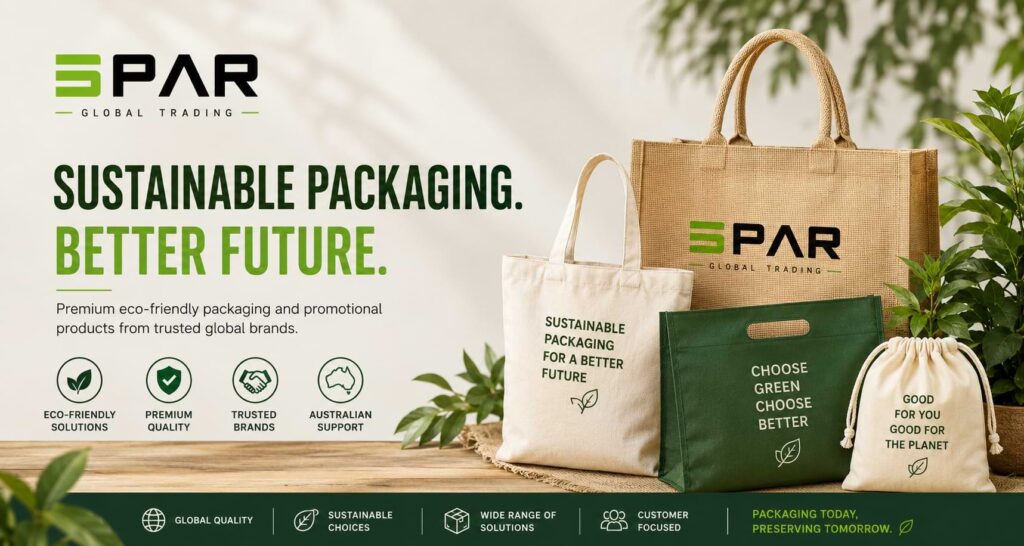
Yes – jute bags are one of the most eco-friendly bag options available. Jute grows in months on monsoon rain with minimal pesticides, absorbs carbon rapidly, and fully biodegrades at end of life. The honest caveat: plastic linings, heavy dyes, and poor reuse habits can shrink that advantage.
Here is that answer in numbers:
- 4–6 months – how long jute takes to grow from seed to harvest, making it one of the fastest-renewing fibres on earth
- Around 15 tonnes of CO2 per hectare – what research cited by the International Jute Study Group suggests a jute crop absorbs in a single short season
- Mostly rain-fed – jute relies on monsoon rainfall rather than irrigation, unlike thirstier fibre crops
- Months to about two years – how long untreated jute takes to biodegrade in soil or compost
- Decades to centuries – how long a plastic bag persists, breaking into microplastics rather than truly decomposing
- 3–4+ years – the working life of a well-made jute bag in regular use
Why trust this answer from a company that sells jute bags? Fair question. Our team sources jute directly from makers in Bangladesh – we’ve stood beside the retting ponds and walked the weaving floors this fibre comes from. That first-hand view is exactly why we’re comfortable telling you the caveats as well as the good news.
The question matters more in 2026 than ever. With lightweight single-use plastic bags banned in every Australian state and territory — and several jurisdictions extending restrictions to heavier plastic bags businesses aren’t choosing whether to switch. They’re choosing what to switch to, and they deserve a straight answer about the alternatives.
How Jute Is Grown: Water, Pesticides, and Carbon
Most of a bag’s environmental story is written before it’s ever a bag. It’s written in the field.
Jute grows in the river delta of Bangladesh and eastern India, timed to the monsoon. That timing is the crop’s quiet superpower: the rain does the irrigating, so jute draws far less on freshwater systems than crops like conventional cotton.
The plant is naturally hardy, too. It grows fast and dense, which crowds out weeds and keeps pesticide and fertiliser needs low compared with most commercial fibre crops.
Then there’s carbon. Jute is a rapid photosynthesiser research cited by the International Jute Study Group suggests a hectare of jute can absorb roughly 15 tonnes of CO2 across a single growing season of around 100 days. Few crops of any kind pull carbon down that quickly.
One more detail that rarely gets mentioned: almost nothing is wasted. The fibre becomes fabric, the leftover woody sticks become cooking fuel and fencing in rural Bangladesh, and the leaves of one variety are even eaten as a vegetable. (If you’d like the full story of the plant itself, see our guide to what jute is and how it’s made.)
Are Jute Bags Biodegradable? What Actually Happens at End of Life
This is where jute genuinely separates itself from plastic and it comes down to what the fibre is made of.
Jute is a natural cellulose fibre. Soil microbes recognise it as food, so an untreated jute bag buried in soil or added to compost breaks down within months to around two years, depending on thickness and conditions. It returns to the earth as organic matter, not residue.
Plastic does something very different. A plastic bag doesn’t biodegrade in any meaningful sense it fragments, breaking into smaller and smaller microplastics that persist in soil and waterways for decades or longer.
A natural-fibre jute bag leaves no microplastics behind. For businesses whose customers care about plastic pollution which, in 2026, is most customers that single fact does a lot of work.
The catch: “biodegradable” applies to the jute. If a bag has a plastic laminate lining, that lining doesn’t compost. Which brings us to the honest part of this article.
The Honest Caveats: What Most Suppliers Won’t Tell You
Jute’s eco credentials are real. They are not unconditional. Three things can quietly shrink a jute bag’s advantage, and buyers should know all three.
1. Laminated linings
Many jute shopping bags carry a thin plastic laminate inside for structure and wipe-clean convenience. It’s a useful feature but it means the bag is no longer fully biodegradable, and it complicates end-of-life disposal. Unlaminated jute, or minimal lamination only where genuinely needed, keeps the bag closest to its natural promise.
2. Dyes, bleaches, and inks
Natural jute needs no bleaching to look good its golden colour is the brand. Heavy bleaching, harsh dyes, or solvent-based inks add chemical load to a product whose whole appeal is being natural. Water-based inks and azo-free dyes preserve the story you’re paying for.
3. Shipping emissions
Jute travels from Bangladesh to Australia by sea. Sea freight is highly efficient per item one bag’s share of a container ship’s emissions is genuinely small but it isn’t zero, and pretending otherwise would undercut everything else in this article. The way to make those freight emissions worthwhile is simple: buy bags that get used for years, not weeks.
That last point is really the master caveat. Any reusable bag jute, cotton, or otherwise earns its footprint through reuse. A jute bag used twice is a waste; a jute bag used for three years is a quiet environmental win.
Jute vs Plastic vs Paper Bags: At a Glance
| Factor | How it’s measured | Jute | Paper | Plastic (single-use) |
|---|---|---|---|---|
| Raw material | Source and renewal cycle | Jute plant; renews in 4–6 months | Trees (decades to renew) or recycled pulp | Fossil fuels; non-renewable |
| Water demand | Irrigation required to grow/produce | Low mostly monsoon rain-fed | Moderate–high; pulping is water-intensive | Low at the factory, high upstream |
| Working life | Typical number of uses | Hundreds of uses over 3–4+ years | Often 1–3 uses before tearing | Usually 1 use |
| Break-even vs single-use plastic | Lifecycle CO2 per use (reuses needed) | Low modest reuse covers it; exact figures vary by study | ~3 uses, per a widely cited UK Environment Agency lifecycle assessment | Baseline for comparison |
| End of life | Time to decompose | Months to ~2 years in soil or compost (if unlaminated) | Weeks to months (if unlined); recyclable | Decades to centuries; fragments instead of decomposing |
| Microplastics | Fragments left in the environment | None natural fibre | None (if unlaminated) | Yes |
| Best-case footprint | Conditions that minimise impact | Unlaminated, naturally finished, reused for years | High recycled content, reused, then recycled | Reused many times, then properly recycled |
The takeaway is straightforward. Paper wins on quick decomposition but fails on durability. Plastic wins on cheap production but fails everywhere after that. Jute is the only one of the three that combines renewable farming, a long working life, and a clean end of life provided it’s made and used well.
Common Mistakes That Undo a Jute Bag’s Eco Benefits
Even a genuinely sustainable product can be used unsustainably. These are the mistakes we see most often:
- Ordering laminated bags by default when an unlaminated bag would suit the use case perfectly
- Treating jute bags as disposable giveaways over-ordering event swag that gets binned defeats the entire purpose
- Retiring bags too early the environmental payback comes from years of reuse, not from the material alone
- Choosing heavy bleaching or dark all-over dyes when the natural golden fabric would carry the brand better
- Binning old bags instead of composting, repurposing, or using them as garden sacking at end of life
- Not asking the supplier questions if a supplier can’t tell you where the fibre comes from or what’s in the lining, that’s your answer
How to Source Jute Bags Responsibly
Sourcing choices decide whether a jute bag lives up to its promise. If you’re buying for a business, charity, or brand, ask these questions before you order:
- Where is the jute grown and made? A supplier should know their supply chain, not just their price list.
- Is the bag laminated and does it need to be? Ask for unlaminated options where practical.
- What inks and dyes are used? Water-based inks and azo-free dyes are the responsible standard.
- How is quality checked? Strong stitching and handles mean longer life, and longer life is the whole environmental point.
- Am I ordering to real demand? The most sustainable bag is one that actually gets used.
This is how we run our own sourcing at SPAR. Every order moves through our end-to-end process sourced from trusted Bangladeshi makers, customised to your brand, inspected before shipping, and delivered with freight and documentation handled. Sustainability isn’t a label we print on the bag; it’s a set of decisions we make before the bag exists, which is exactly the eco commitment our clients partner with us for.
You can see the full range of options sizes, handles, printing, and finishes on our jute and cotton bags page.
Questions People Ask About Jute Bags
“Can I put a jute bag in my compost bin?” Yes if it’s unlaminated. Cut it into strips to speed things up, and remove any plastic lining or non-fabric fittings first. A laminated bag should be reused or repurposed instead.
“How long does a jute bag actually last?” With normal weekly use, a well-made jute bag typically lasts three to four years or more. Quality of stitching and handles makes the biggest difference, which is why inspection before shipping matters.
“Do jute bags shed microplastics like some reusable bags do?” No. Jute is a natural plant fibre, so there’s no plastic to shed. The only exception is a laminated lining, which is why we encourage buyers to choose unlaminated designs where practical.
“Is jute more eco-friendly than cotton?” Generally, yes jute needs far less water and fewer inputs to grow, so it reaches its environmental break-even point faster. Cotton has its own strengths for branding and feel; we compare the two properly in our jute vs cotton bags guide.
“Are printed jute bags still eco-friendly?” Yes, when printed responsibly. Water-based inks on natural fabric add minimal impact and a printed bag that people actually want to carry gets reused more, which improves its footprint.
Want jute bags that are sustainable in fact, not just in name? Request a quote for sustainably sourced jute bags customised, quality-checked, and delivered end to end.